aug 2026 | layyr
Making an invisible price feel honest.
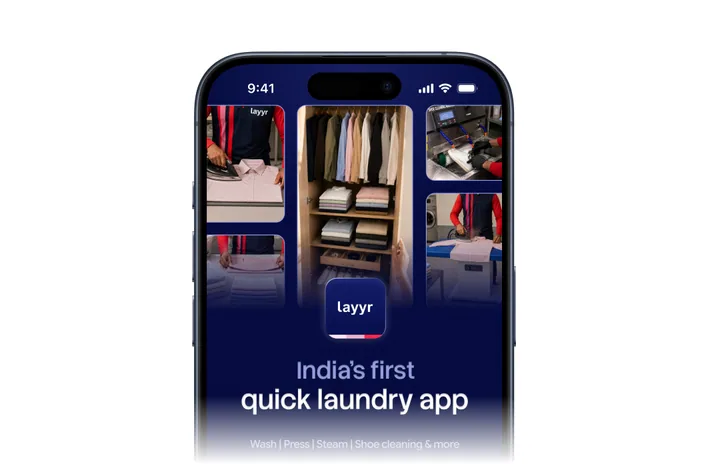
How do you design pricing for a service that can't tell you the price? Layyr is an upcoming end-to-end laundry startup in Bengaluru that provides doorstep pickup, wash, and delivery, done through an app instead of a neighbourhood dhobi.
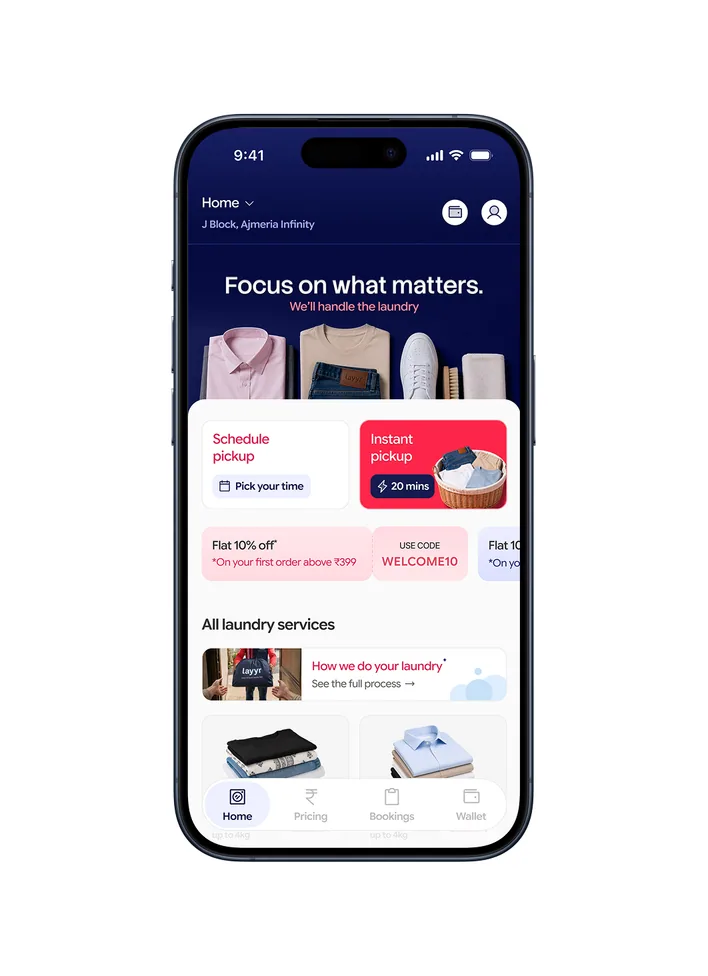
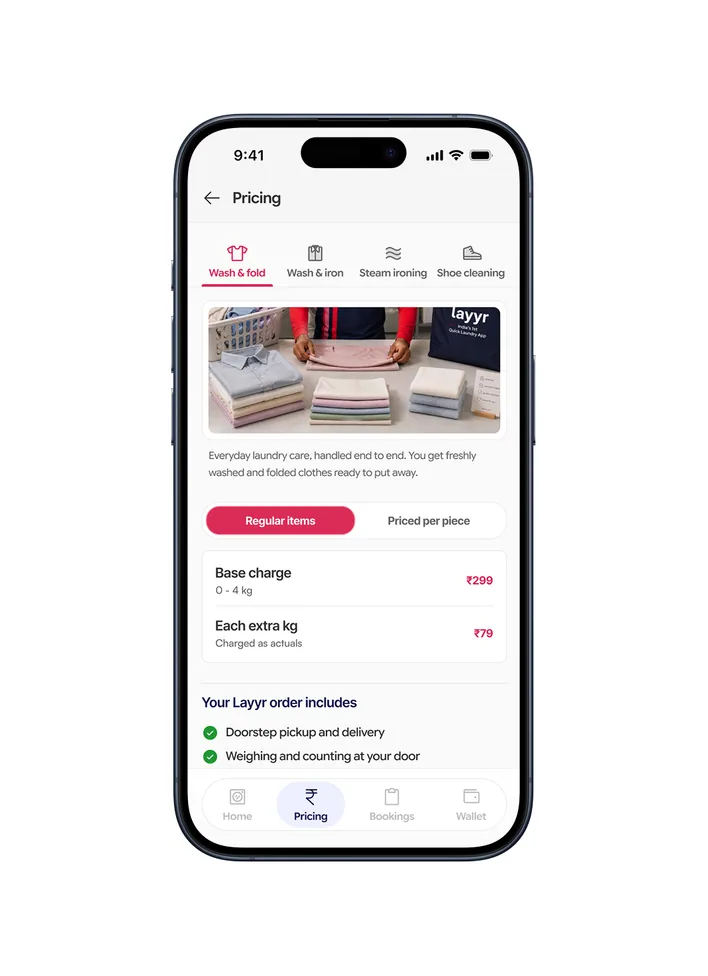
Laundry can't be priced upfront the way a cab ride or a food order can. A wash & fold order might be 3kg or 7kg and a wash & iron bag might have four shirts or fourteen. This single fact shaped almost every screen in this flow.
How India already does laundry
Long before there was an app, there was a system that already solved this informally. Most people in Bengaluru don't grow up transacting laundry through fixed price lists.
They grow up handing a bag to a dhobi they've used for years, who eyeballs the weight, remembers the family's usual load, and settles the bill on trust and a running tab and sometimes literally a chit or a notebook.
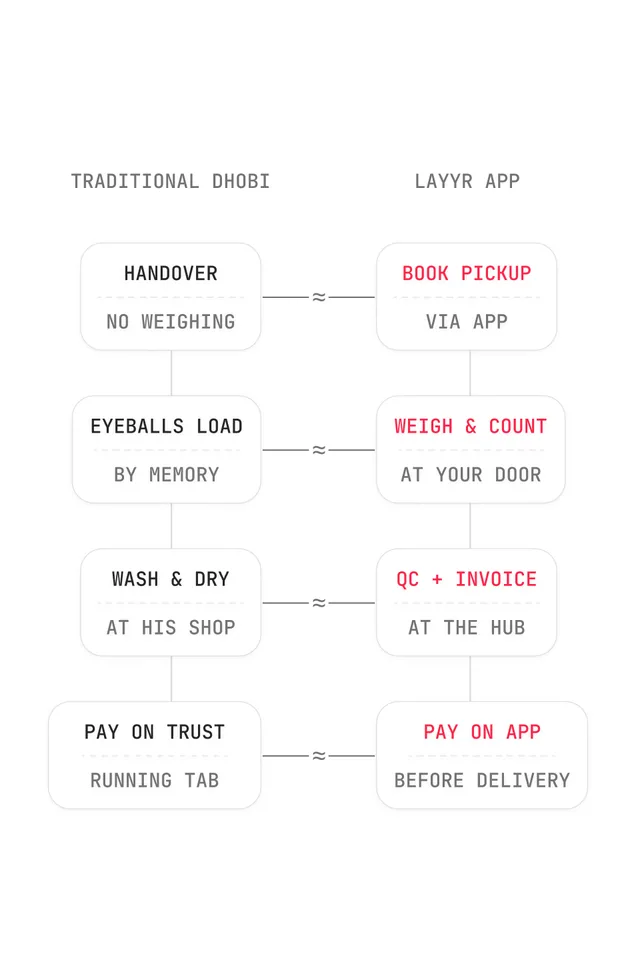
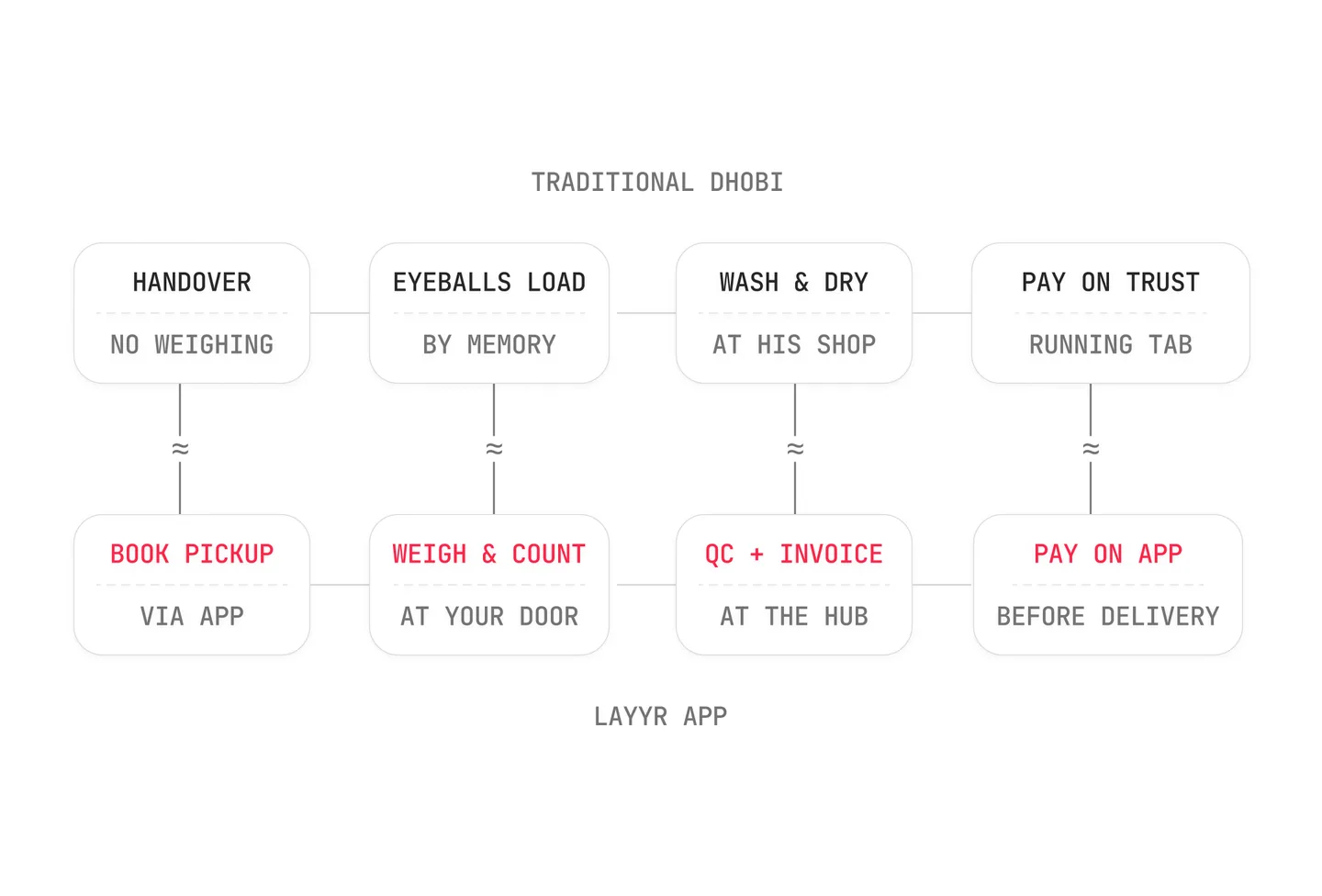
That informal system works because trust is personal and repeated. An app doesn't have either of those things on day one, a new user has no history with Layyr, no dhobi-uncle they've used for six years, no notebook of past bills to sanity-check against.
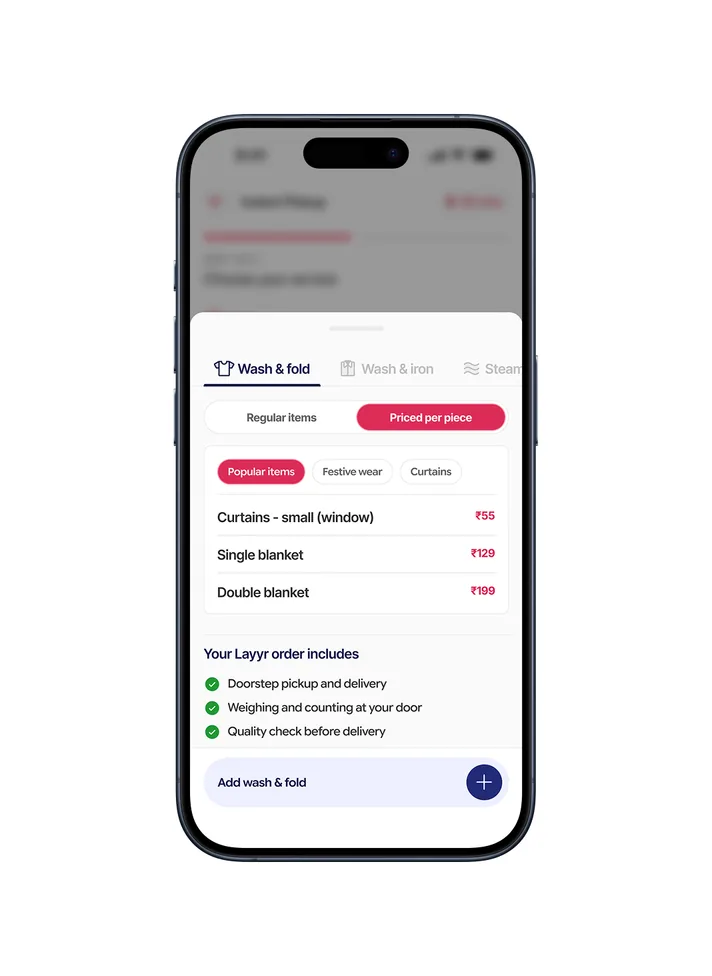
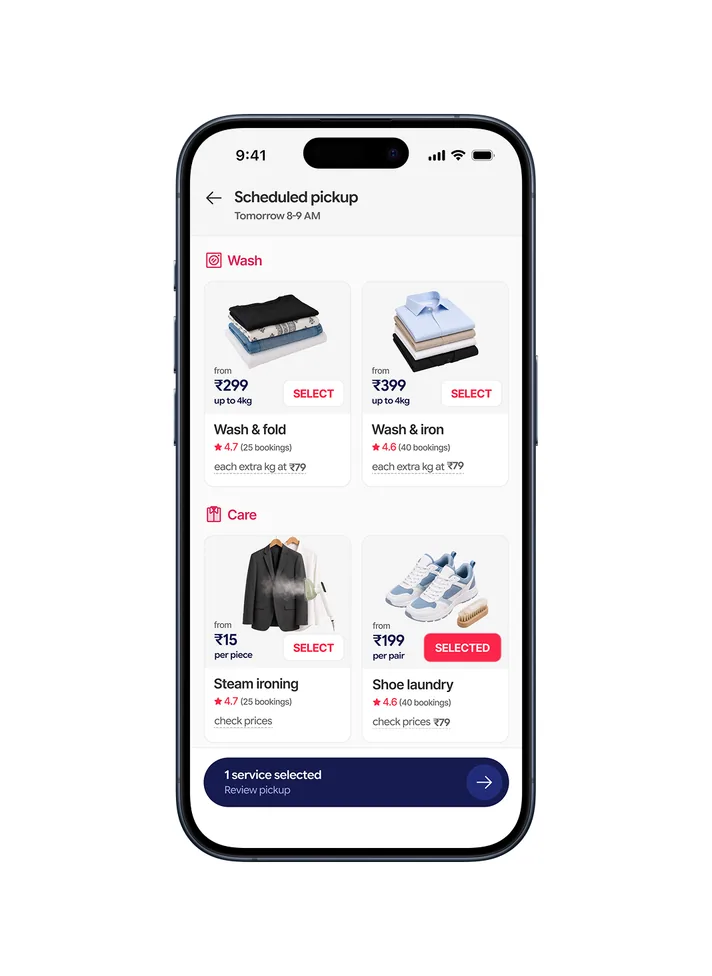
Digital laundry has to manufacture in a few taps what a dhobi relationship builds over years. So instead of trying to out-precise the dhobi with a number the app couldn't actually promise, the design borrowed the feeling of that relationship instead
The goal wasn't to make an app that pretends to be a dhobi. It was to identify why the dhobi model felt trustworthy despite being just as imprecise — and rebuild that same honesty with UI instead of history.
Mapping the pricing question across the flow
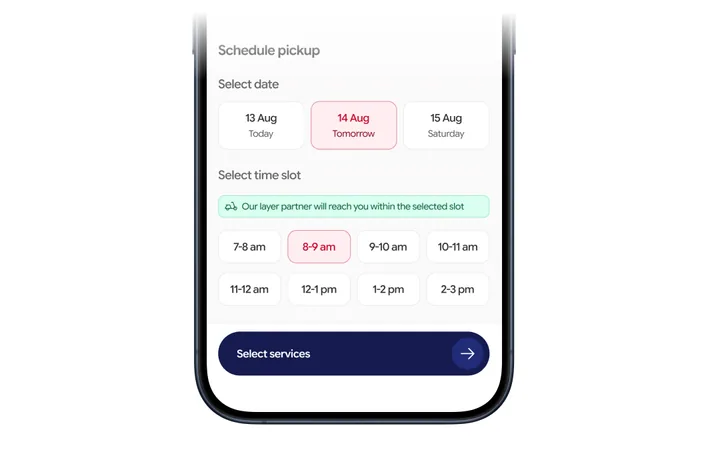
If pricing anxiety could show up anywhere, it needed an answer everywhere. Once the core problem was framed as trust, not precision, the process became less about designing one "pricing screen" and more about auditing every point in the booking journey where a user might silently wonder "wait, how much is this going to cost me?" and making sure none of those moments went unanswered.
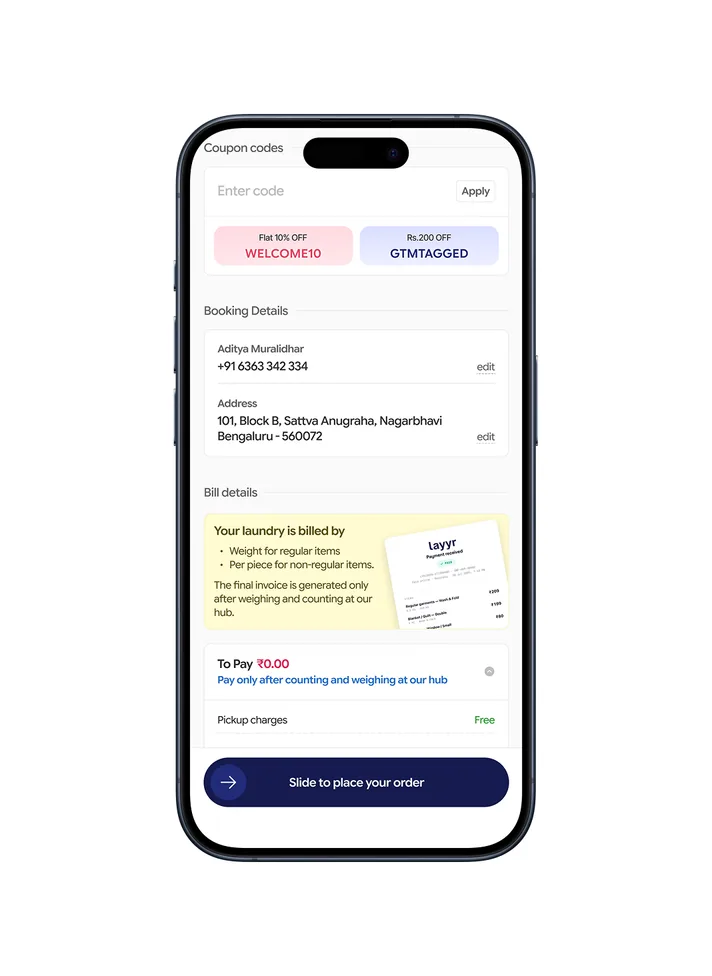
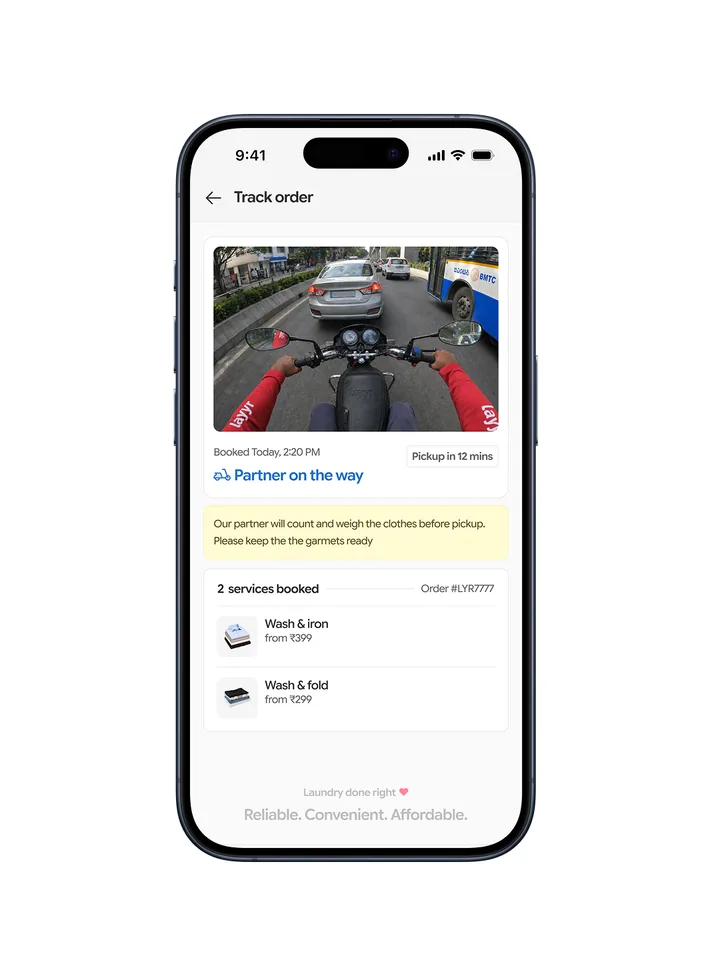
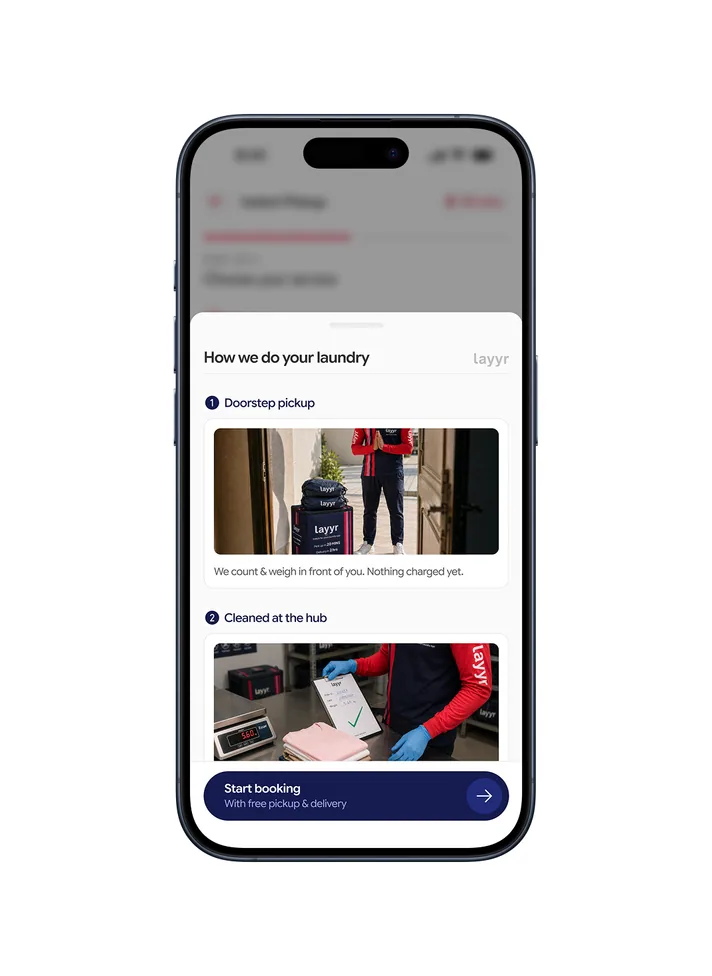
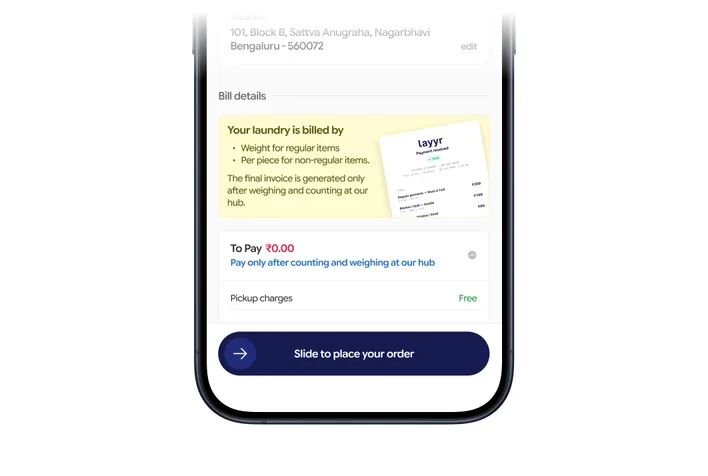
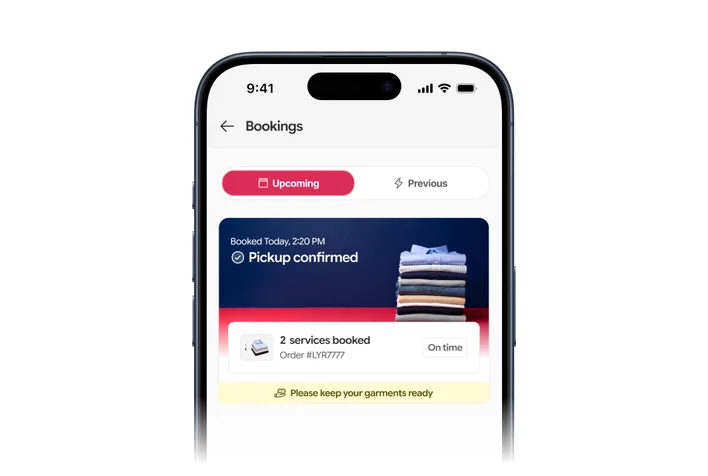
Each touchpoint reinforced the same honest message in a way appropriate to that moment : ambient on the homepage, detailed on the pricing tab, explicit at checkout.
Reflections
Transparency about uncertainty beats false precision.
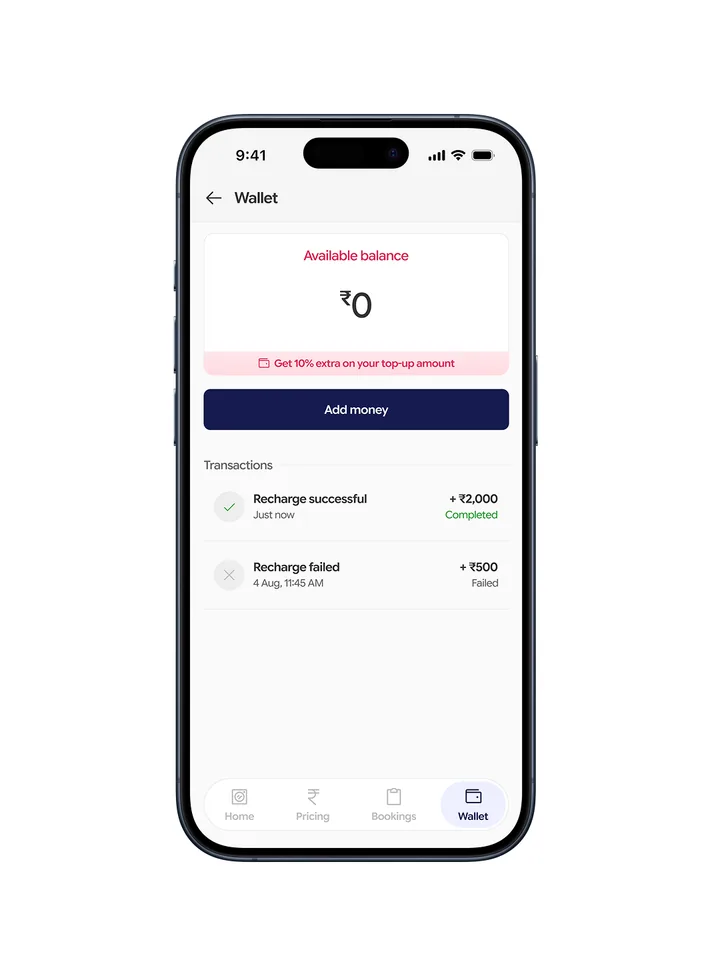
Users don't actually need an exact number upfront, they need to trust why there isn't one yet. Once the app started explaining the weighing process instead of hiding behind a vague "from ₹X," the ₹0.00 total stopped feeling like a bug and started feeling like a promise.
Traditional systems are usually solving the same problem you are, just informally.
Looking at how a dhobi builds trust without a price list was more useful than looking at other laundry apps. The competition wasn't other startups; it was decades of an informal system that already had the user's trust.
Fast timelines force you to solve the real problem, not every problem.
With 15 days for full flow and handover. Constraint pushed the solution toward something more durable: clear, repeated, honest communication. I leveraged figma AI to save a lot of time on the handoff part.
This project moved because of the relentless collaboration with Prateek Rana and Achyut Kulkarni who built alongside me, questioned my decisions, and helped shape this whole experience. Thank you.